
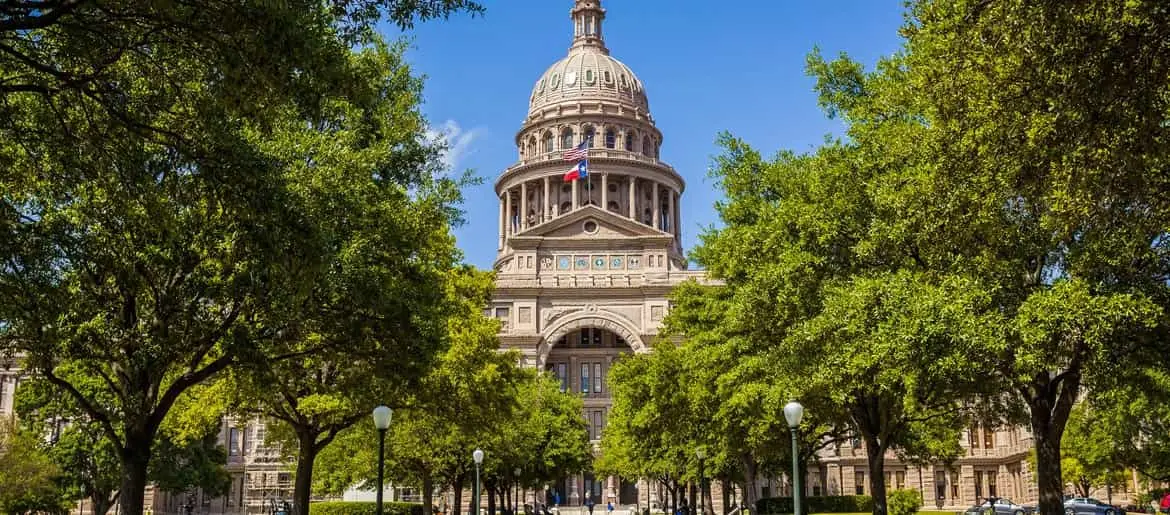
Texas is located in the southern region of the United States and shares borders with Louisiana to the east, Arkansas to the northeast, Oklahoma to the north, New Mexico to the west, and the Mexican states of Chihuahua, Coahuila, Nuevo León, and Tamaulipas to the south, along with a coastline on the Gulf of Mexico. Spanish explorers, including Álvar Núñez Cabeza de Vaca and Francisco Vásquez de Coronado, were the first Europeans to visit the area during the 1500s and 1600s, establishing Ysleta near El Paso in 1682. In 1685, French explorer Robert Cavelier, Sieur de La Salle, founded a short-lived colony at Matagorda Bay. American settlers led by Stephen F. Austin began arriving in 1821 while Texas was under Mexican rule, following Mexico’s independence from Spain. After years of tension, the Texas Revolution broke out, and in 1836, the Republic of Texas declared its independence, with Sam Houston as its first president. Famous battles like the Alamo and San Jacinto became symbols of courage and freedom. Texas joined the United States on December 29, 1845, as the 28th state, sparking the Mexican–American War over disputed borders.
Texas is one of the most economically powerful states in the United States, rich in both natural and industrial resources. It ranks among the nation’s leaders in oil and natural gas production, alongside Alaska. Agriculture also plays a major role, with the state producing vast quantities of cotton, cattle, poultry, rice, hay, wheat, and peanuts. Texas farms supply fruits and vegetables nationwide, as well as greenhouse and nursery products. Beyond farming, Texas is home to advanced industries such as aerospace, biotechnology, and high technology. Major cities like Houston, Dallas, and Austin have become global centers of energy, innovation, and business, helping to make Texas one of the world’s top ten economies if it were a country on its own.
Texas is filled with historic and cultural landmarks that showcase its diverse heritage. The Arts District in Dallas, spanning 68 acres, features major attractions like the Dallas Museum of Art, Nasher Sculpture Center, and Morton H. Meyerson Symphony Center. The AT&T Stadium, home of the Dallas Cowboys, seats over 85,000 fans and stands as one of the most impressive sports venues in the world. The Bank of America Plaza in Dallas, rising more than 900 feet with 72 stories, is the tallest building in the state. Other landmarks include the Alamo in San Antonio, Bishop’s Palace in Galveston, the John F. Kennedy Memorial, Dealey Plaza, and the Grand 1894 Opera House. Visitors can also enjoy Galveston’s historic seawall, ferries, and beaches, or explore Fort Worth’s stockyards and Austin’s live-music scene.
Living in Texas means embracing a bold, proud, and welcoming culture. Texans are famous for their hospitality, independence, and state pride. The landscape offers incredible variety — from mountains and deserts to forests, beaches, and vast plains. The state’s food culture is legendary, known for barbecue, Tex-Mex cuisine, and hearty southern comfort dishes. Outdoor lovers enjoy the many parks, rivers, and nature reserves, while rodeo enthusiasts celebrate the world’s largest rodeo held annually in Houston. With strong job opportunities, affordable living, and a vibrant mix of cultures, Texas offers something for everyone. Whether you’re drawn to its history, its economy, or its endless sunshine, Texas truly lives up to its nickname — the Lone Star State.
Back to map