
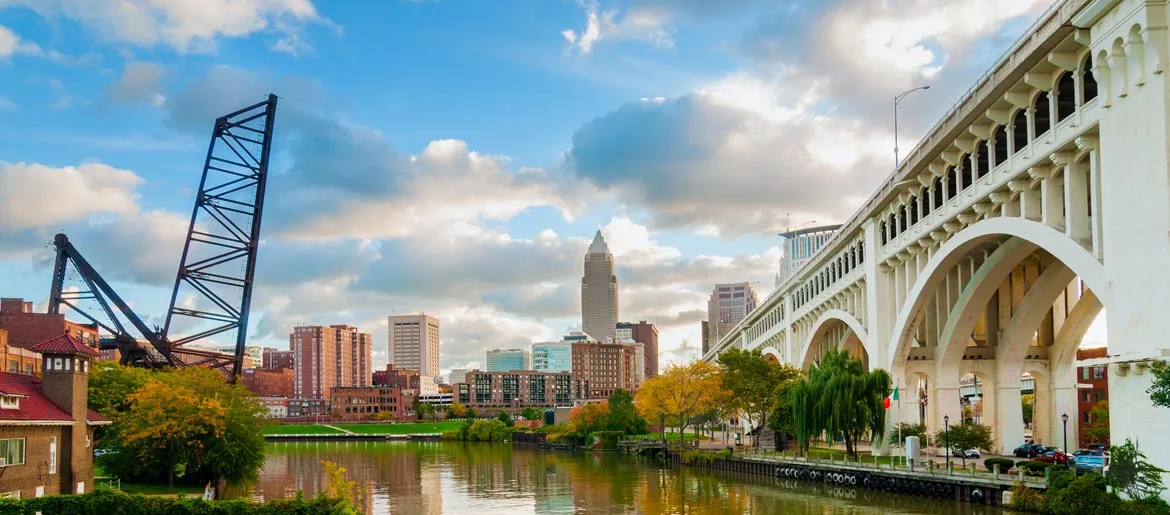
Ohio, known as the Midwestern state, is bordered by Pennsylvania to the northeast, West Virginia to the southeast and Kentucky to the south along the Ohio River, Indiana to the west, and Michigan and Lake Erie to the north. The area was first explored by the French explorer Robert Cavelier, Sieur de La Salle, in 1669. The British later took control of the territory after the French and Indian Wars. Following the Revolutionary War in 1783, the United States acquired the land of Ohio, and that same year, Marietta became the first permanent settlement established in the region.
During the 1790s, Ohio saw intense fighting among Native American tribes and American forces. One of the major battles was the Battle of Fallen Timbers in 1794, which marked a turning point that led to the opening of the Northwest Territory for settlement. Ohio covers 41,222 square miles, or 106,765 square kilometers, and had a population of over 12 million in 2024. The state capital and largest city is Columbus. Ohio was admitted into the Union as the 17th state on March 1, 1803, marking the beginning of its development as one of the nation’s most important industrial and agricultural centers.
Ohio is one of the leading industrial states in the country, ranking third in manufacturing employment nationwide. Its major cities each serve as hubs for different industries. Cincinnati is known for jet engines and machine tools, Akron for rubber, Canton for roller bearings, Youngstown and Steubenville for steel, Cleveland for auto assembly and auto parts, Toledo for glass and auto parts, and Dayton for office machines, refrigeration, and heating equipment. Together, these industries have made Ohio a powerhouse of American manufacturing and innovation for more than a century.
In addition to its industrial strength, Ohio has a thriving agricultural sector. The state produces large quantities of corn, wheat, greenhouse and nursery products, hay, fruits, apples, peaches, strawberries, and grapes. More than half of Ohio’s agricultural revenue comes from dairy, sheep, and pig farming. The state also ranks fourth in lime production and is a leading source of sand, stone, and gravel. This balanced economy of farming, manufacturing, and natural resource extraction has long made Ohio one of the most stable and productive states in the nation.
Ohio is rich in cultural and historical landmarks. The Akron Art Museum, originally a school, was transformed into a museum in 1965. The Athens Lunatic Asylum, also known as The Ridges, stands as one of the state’s most unique architectural sites. The Carnegie Public Library, dedicated on May 8, 1902, owes much of its success to Andrew Carnegie’s contributions. Other attractions include the Chadwick Arboretum and Learning Gardens in Franklin County, the Creegan Animation Factory, the East Liverpool High School Alumni Clock Tower, the First Federal Land Office in Jefferson County, and the Gnadenhutten Massacre Monument. Music lovers will appreciate the world-famous Rock and Roll Hall of Fame in Cleveland, while history enthusiasts can explore the National Underground Railroad Freedom Center and the World War I Memorial.
Ohio is the seventh most populous state in the country, offering countless opportunities for work, leisure, and community life. Its residents are passionate about sports, especially their local teams, and the energy surrounding college and professional games unites the state. Ohio is also a great place for music lovers, being the home of rock and roll and many legendary performers. The state’s amusement parks and outdoor attractions provide fun and excitement for families and visitors alike. Living in Ohio means enjoying a balance of tradition, opportunity, and entertainment that makes life truly enjoyable.
Back to map