
North Dakota is located in the northern Great Plains region of the United States. It is bordered by Minnesota, across the Red River of the North to the east, South Dakota to the south, Montana to the west, and the Canadian provinces of Saskatchewan and Manitoba to the north. The first Europeans to explore the area were French Canadians led by Sieur de la Verendrye between seventeen thirty eight and seventeen forty. In eighteen oh three, most of the land that makes up North Dakota was acquired by the United States from France as part of the Louisiana Purchase. Between eighteen oh four and eighteen oh six, the famous explorers Lewis and Clark traveled through the region. Scottish and Irish families later made the first settlement in Pembina, although the land was still in dispute between Great Britain and the United States at that time. The northeastern region was officially obtained from Britain by treaty in eighteen eighteen, and the United States took full possession of Pembina in eighteen twenty three. However, significant settlement did not occur until after the construction of the railroad in the eighteen eighties.
North Dakota covers a total land area of 70,665 square miles, or 183,022 square kilometers, and had a population of just over eight hundred thousand in twenty twenty four. The state capital is Bismarck, while the largest city is Fargo. North Dakota was admitted into the Union on November second, eighteen eighty nine, as the thirty ninth state. The state is known for its vast open landscapes, friendly people, and strong agricultural traditions. Its plains, rivers, and farmlands define both its geography and its way of life.
North Dakota is one of the most rural states in the country, with farms stretching across much of its land. It is a national leader in the production of durum wheat and other grains. Additional agricultural products include barley, sunflower, rye, dry peas, honey, oats, sugar beets, hay, sheep, pigs, cattle, and flaxseed. The fertile soil and favorable growing conditions make agriculture the backbone of North Dakota’s economy. The state is also known for its strong sense of community among farmers and agricultural families, who play a key role in sustaining local economies.
In addition to agriculture, North Dakota is rich in natural resources. The state produces natural gas, gravel, lignite, sand, and clay, and is also home to significant reserves of coal and oil. The energy industry has been a major contributor to the state’s rapid economic growth, attracting new investments and creating employment opportunities. Beyond industry, North Dakota offers beautiful outdoor recreation areas, parks, and wide open spaces where residents and visitors alike can enjoy hiking, fishing, camping, and nature observation.
North Dakota is home to a number of fascinating landmarks that tell the story of its past and present. The Fort Union Trading Post National Historic Site, located in Williams County, was an important trading center until eighteen sixty seven. The North Dakota State Capitol, a nineteen story building standing at 241 feet tall, is the tallest structure in the state and a symbol of its government. The State Capitol Grounds provide visitors with an insight into North Dakota’s rich history. Other notable landmarks include the Dakota Zoo, Fort Berthold Indian Reservation, Whitestone Battlefield State Park, Fort Totten Indian Reservation, Rainbow Valley Church, and the Geographical Center of North America Monument, which marks the approximate center of the continent.
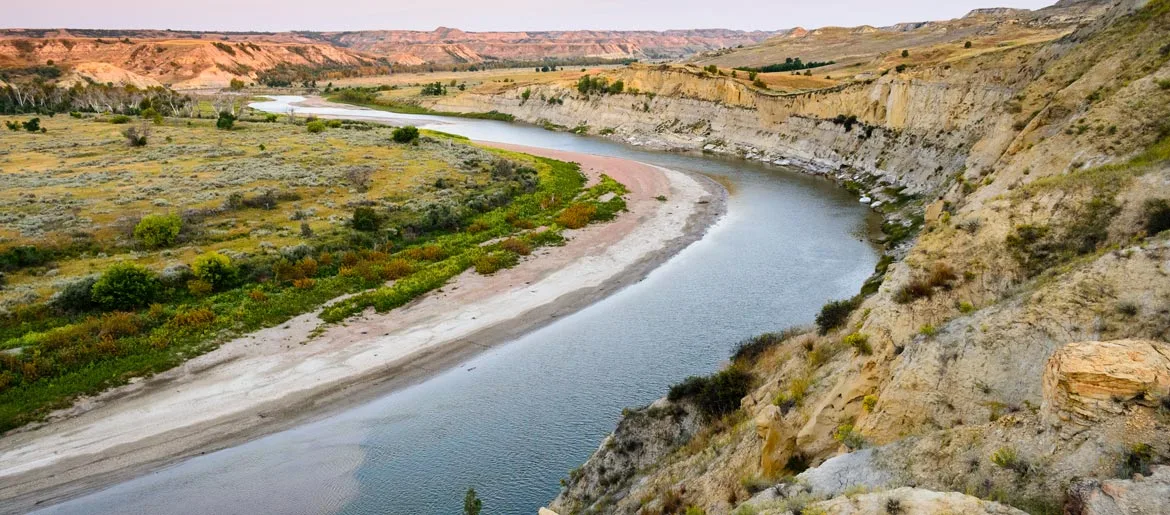
Living in North Dakota offers peace, space, and opportunity. The state is developing rapidly, with growing communities and expanding industries. The stunning landscape, from the Little Missouri River to the Red River Valley, provides breathtaking views throughout the year. Quiet pioneer towns still reflect the state’s early heritage, offering a simple and peaceful lifestyle. During the summer, the fields of sunflowers paint the countryside in bright yellow, adding to the charm of life in the state. The people of North Dakota are friendly and hardworking, and while the winters can be cold, the weather is manageable and the sense of community makes it feel warm all year round.
Back to map